
A full lineup of BBC monitors used in various studios!
The design department room was packed with BBC monitor speakers.
Currently adjusting the LS3/4C wall-mounted network monitor for TV studios.
The small speaker on top is LS3/5A made by KEF, and the one below is L for studio monitors.
The latest BBC monitor speaker, the LS5/8, is equipped with a Rogers Quad 405A amplifier.
Also, what is important for monitor speakers is that they can reproduce the same sound at any time. This may seem obvious, but unlike consumer devices, they are played for long periods of time.
This is added when improvements are made to the original model or when the unit is changed.
There are many types of BBC monitor speakers, but the underlying idea is that the voice of a male announcer should sound naturally balanced. During the development stage, the voice source is always played back and checked. What’s unique is that several test models are made and members of the public are invited to listen to them, and they are asked to choose the model that makes the music sound most natural. From these, they are then adjusted and developed.
Therefore, its stability and durability are beyond compare.
In their unwavering pursuit of perfection and unwavering confidence, I sensed the British spirit that lives on in their long history and tradition.
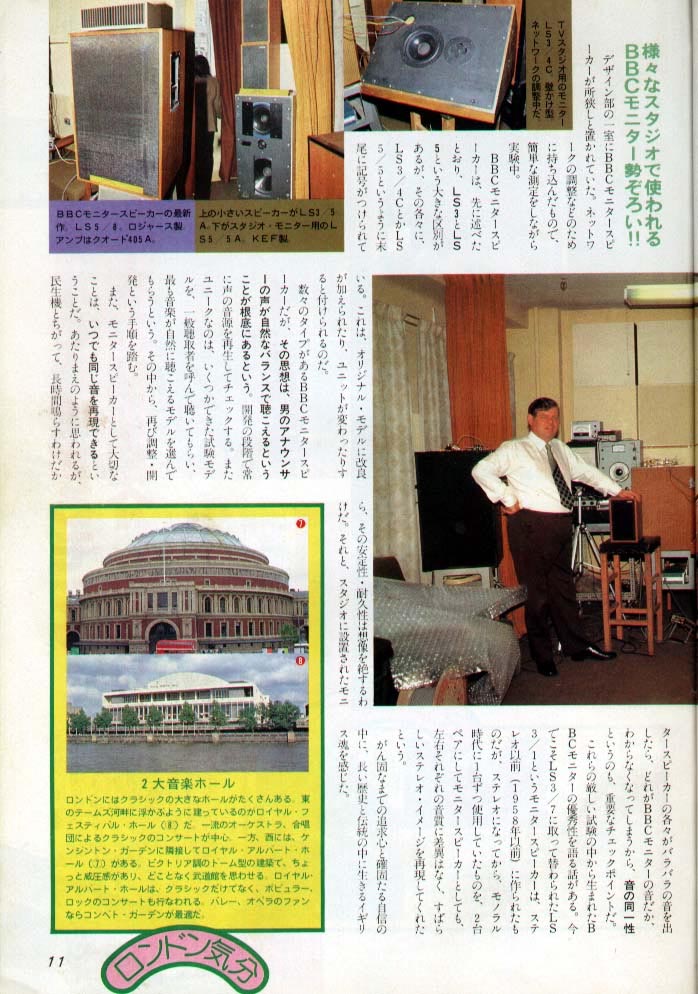
London is home to many large classical music halls. The Royal Festival Hall (8), which seems to float on the banks of the River Thames in the east, primarily hosts classical music concerts by first-class orchestras and choirs. To the west, adjacent to Kensington Gardens, lies the Royal Albert Hall (7). Its Victorian-style domed architecture gives it a somewhat intimidating presence, somewhat reminiscent of the Budokan. The Royal Albert Hall not only hosts classical music, but also pop and rock concerts. Ballet and opera fans should visit Kensington Gardens.
If each monitor speaker produced a different sound, it would be difficult to tell which was the BBC monitor sound, so consistency of sound is an important checkpoint.
There is a story that speaks of the superiority of the BBC monitor.
The monitor speaker called LS3/1 that emerged from these rigorous tests was made before stereo (before 1958), but after the advent of stereo, instead of using one speaker each in the mono era, it was paired with two speakers and was able to reproduce a wonderful stereo image with no difference in sound quality between the left and right speakers.